

Why “Prince” Andrew has been stripped of all royalty

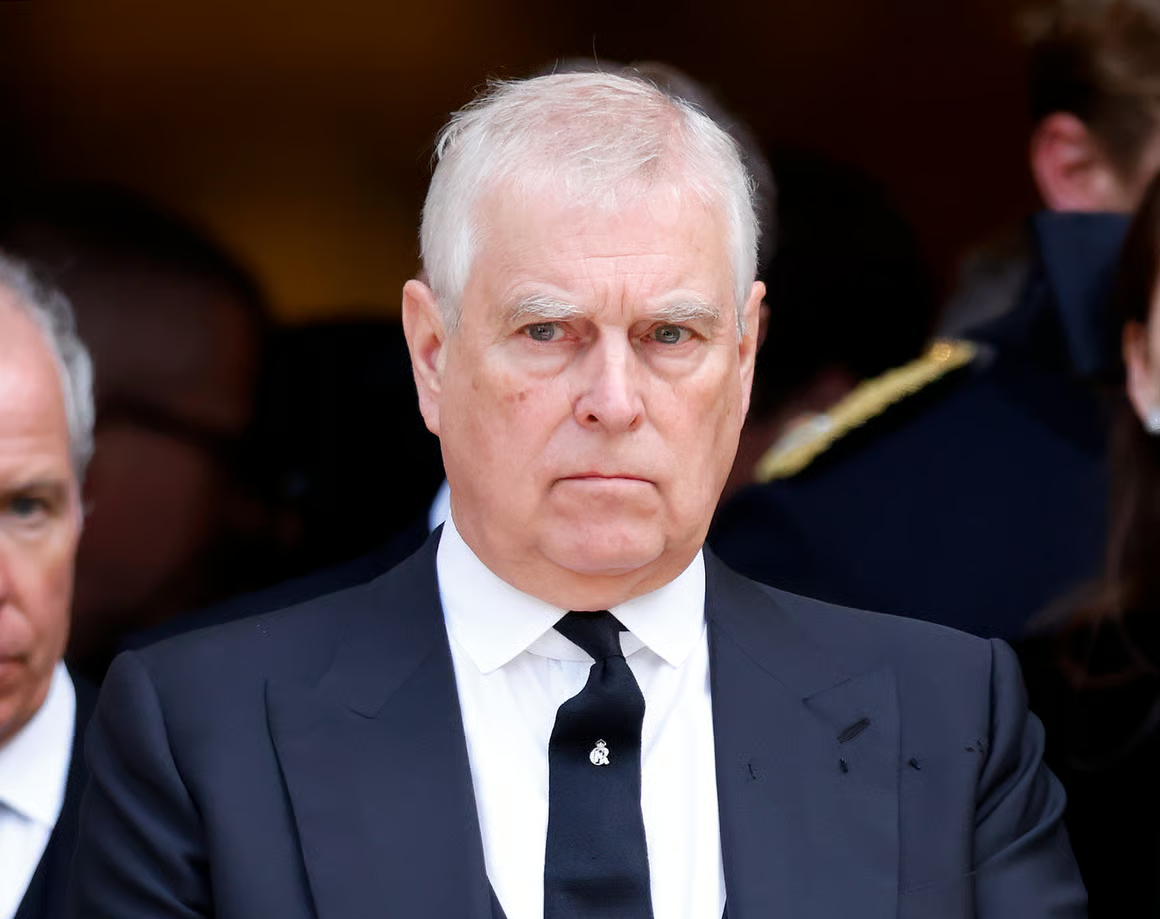
The British royal family has faced its share of crises, but none has left a mark quite like the downfall of Prince Andrew. Once one of the most visible members of the monarchy, Andrew’s royal identity has now been completely erased. In a sweeping decision announced in late October 2025, King Charles III formally stripped his younger brother of all remaining titles and privileges, ending his right to be called Prince or His Royal Highness. From now on, he will simply be known as Andrew Mountbatten Windsor.
The decision, though shocking to some, did not come as a surprise. It followed years of scandal, public outrage, and pressure on the monarchy to take decisive action. At the heart of Andrew’s fall from grace lies his association with Jeffrey Epstein, the American financier and convicted sex offender whose crimes revealed a disturbing network of power and abuse. When Epstein’s activities became public in 2019, Andrew’s friendship with him quickly drew attention, and soon after, the accusations surfaced.
Virginia Giuffre, one of Epstein’s victims, alleged that she had been trafficked to have sex with Andrew when she was 17. He denied the claims, but his public defense only made matters worse. During his now infamous BBC interview that same year, Andrew attempted to explain his relationship with Epstein, insisting he had done nothing wrong. His responses, however, were widely viewed as evasive and insensitive. His claim that he was unable to sweat on the night of the alleged incident became one of the most ridiculed moments in royal history. Viewers were outraged not only by what he said but by what he failed to say, as he expressed no sympathy for Epstein’s victims.
The fallout was swift. Sponsors distanced themselves, charities cut ties, and public trust in him collapsed. The late Queen Elizabeth II, facing growing criticism, directed her son to withdraw from public duties. By 2022, she had removed his military titles and patronages, further isolating him from royal life. Andrew later reached an out-of-court settlement with Giuffre, reportedly worth millions of pounds, while maintaining his denial of the allegations.
Even after the settlement, the controversy refused to fade. When King Charles ascended the throne later that year, he inherited a monarchy still struggling to rebuild public confidence. At first, the King allowed his brother to maintain a quiet life away from the spotlight, but pressure continued to mount from the public and within the royal circle for a more definitive step.
The turning point reportedly came after renewed scrutiny of Andrew’s conduct and his reluctance to live privately outside the royal framework. Palace sources described rising tensions over his continued residence at the Royal Lodge in Windsor and his desire to return to public duties. King Charles, determined to protect the image of the Crown, saw this as the final straw. Seeking to draw a clear boundary between royal responsibility and personal scandal, he approved the decision to strip Andrew of his title and all remaining royal privileges.
The statement from Buckingham Palace confirmed that Andrew would no longer be styled as His Royal Highness or hold his peerages, including Duke of York and Earl of Inverness. He would also be required to leave his official residence and move into accommodation funded privately. For the monarchy, the decision was about accountability and preservation. For Andrew, it marked the complete end of a life defined by royal privilege.
Such an action is rare in modern royal history. The last time a member of the British royal family lost their princely status was during World War I, when relatives who supported Germany were stripped of their titles. More than a century later, the same has occurred again, this time not because of war or politics, but because of scandal and the loss of public trust.
Today, Andrew lives in quiet disgrace, far removed from the ceremonial life he once knew. His name has been removed from official records of royal peers and replaced with his given name, Andrew Mountbatten Windsor. For a man once considered the Queen’s favorite son, it is an unimaginable fall from grace.
About The Author




