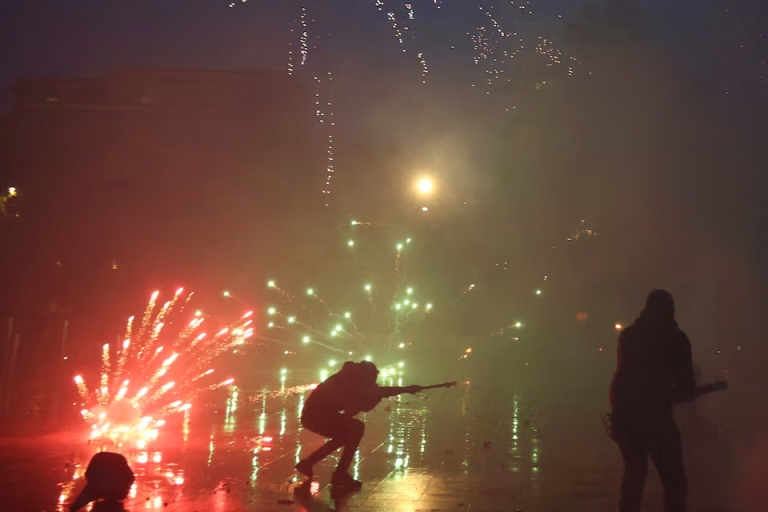
Geneva peace talks end without breakthrough as Russia-Ukraine divide persists


Geneva’s latest attempt to broker peace in Ukraine ended in stalemate this week, underscoring the gulf between Moscow’s territorial demands and Kyiv’s insistence on sovereignty as the war approaches its fourth anniversary.
The two‑day trilateral negotiations, involving Russia, Ukraine, and the United States, were described as “difficult” by both Kremlin envoy Vladimir Medinsky and President Volodymyr Zelensky. While U.S. mediator Steve Witkoff had voiced optimism, the talks yielded only limited progress on military issues such as ceasefire monitoring and front‑line positions.
“The attempt to subvert the constitutional order cannot go unpunished,” the presiding judge said during the verdict announcement.
Zelensky accused Russia of “trying to drag out negotiations that could already have reached the final stage,” while Ukrainian negotiator Rustem Umerov struck a more measured tone, calling the discussions “substantive and intensive” but stressing that alignment among all parties would take time.
At the heart of the deadlock is Russia’s demand for full control of the Donbas region, a non‑starter for Kyiv. Zelensky has compared such concessions to the 1938 Munich Agreement, warning that surrendering territory would leave Ukraine vulnerable to renewed invasion.
Another unresolved issue is the Zaporizhzhia Nuclear Power Plant, Europe’s largest, which has been under Russian control since 2022. Ukraine has demanded its return, even suggesting shared oversight with the United States, an idea Moscow is unlikely to accept.
The talks also revealed tensions among allies. European representatives from Britain, France, Germany, and Italy were present but excluded from the main sessions, meeting only with Ukrainian officials on the sidelines. Zelensky insisted their participation was “indispensable” for any final deal.
Meanwhile, U.S. President Donald Trump has grown impatient with the deadlock, telling reporters that Ukraine had “better come to the table, fast.” Zelensky rejected the remark as “not fair,” insisting his country should not be pressured into compromise.
The Geneva stalemate comes as Ukraine braces for the fourth anniversary of Russia’s full‑scale invasion. Overnight strikes killed four people and injured 30, leaving millions without power or heating in one of the coldest winters in years.
For Zelensky, the talks offered little relief. “On the political direction it’s more difficult,” he admitted in an interview, adding that he found Trump’s attitude toward Vladimir Putin “very, very painful.”
With another round of negotiations expected in Switzerland, the question remains whether incremental progress on military arrangements can eventually bridge the political chasm, or whether the war will grind on into a fifth year.
Geneva’s latest attempt to broker peace in Ukraine ended in stalemate this week, underscoring the gulf between Moscow’s territorial demands and Kyiv’s insistence on sovereignty as the war approaches its fourth anniversary.
The two‑day trilateral negotiations, involving Russia, Ukraine, and the United States, were described as “difficult” by both Kremlin envoy Vladimir Medinsky and President Volodymyr Zelensky. While U.S. mediator Steve Witkoff had voiced optimism, the talks yielded only limited progress on military issues such as ceasefire monitoring and front‑line positions.
“The attempt to subvert the constitutional order cannot go unpunished,” the presiding judge said during the verdict announcement.
Zelensky accused Russia of “trying to drag out negotiations that could already have reached the final stage,” while Ukrainian negotiator Rustem Umerov struck a more measured tone, calling the discussions “substantive and intensive” but stressing that alignment among all parties would take time.
At the heart of the deadlock is Russia’s demand for full control of the Donbas region, a non‑starter for Kyiv. Zelensky has compared such concessions to the 1938 Munich Agreement, warning that surrendering territory would leave Ukraine vulnerable to renewed invasion.
Another unresolved issue is the Zaporizhzhia Nuclear Power Plant, Europe’s largest, which has been under Russian control since 2022. Ukraine has demanded its return, even suggesting shared oversight with the United States, an idea Moscow is unlikely to accept.
The talks also revealed tensions among allies. European representatives from Britain, France, Germany, and Italy were present but excluded from the main sessions, meeting only with Ukrainian officials on the sidelines. Zelensky insisted their participation was “indispensable” for any final deal.
Meanwhile, U.S. President Donald Trump has grown impatient with the deadlock, telling reporters that Ukraine had “better come to the table, fast.” Zelensky rejected the remark as “not fair,” insisting his country should not be pressured into compromise.
The Geneva stalemate comes as Ukraine braces for the fourth anniversary of Russia’s full‑scale invasion. Overnight strikes killed four people and injured 30, leaving millions without power or heating in one of the coldest winters in years.
For Zelensky, the talks offered little relief. “On the political direction it’s more difficult,” he admitted in an interview, adding that he found Trump’s attitude toward Vladimir Putin “very, very painful.”
With another round of negotiations expected in Switzerland, the question remains whether incremental progress on military arrangements can eventually bridge the political chasm, or whether the war will grind on into a fifth year.
Source: BBC
About The Author