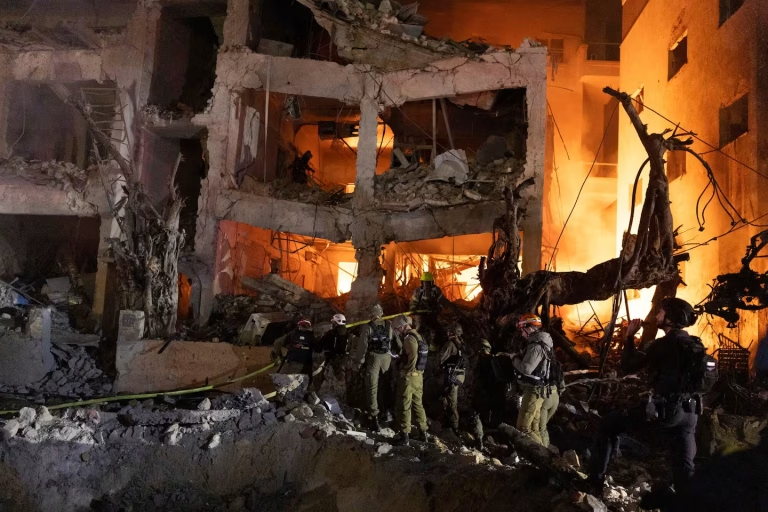

Why the Middle East saw a wave of missile attacks in one weekend


The Middle East witnessed one of its most intense military escalations in years over the weekend as missiles and drones were launched across several countries following a major military operation targeting Iran.
The surge in attacks began after the United States and Israel launched coordinated strikes inside Iran on Saturday in an operation aimed at weakening the country’s military infrastructure. Reports indicate the strikes targeted missile launch sites, air defence systems and strategic command facilities.
The operation marked one of the most significant direct military confrontations involving Iran in recent years and immediately raised tensions across the region.
Iran’s retaliation
Within hours of the initial strikes, Iran launched a large-scale response involving missiles and drones aimed at locations connected to US military assets and allied countries in the region.
Missiles were reported heading toward Israel as well as toward areas hosting American military forces in countries such as Bahrain, Qatar, Kuwait and the United Arab Emirates.
Air defence systems across the Gulf were activated as the projectiles crossed regional airspace. While many of the missiles were intercepted, falling debris from the interceptions reportedly caused damage and casualties in some areas.
Security analysts say the scale of Iran’s response was designed to demonstrate that any direct attack on its territory would be met with immediate regional consequences.
A conflict years in the making
The latest escalation did not happen in isolation.
Tensions between Iran, Israel and the United States have been building for years over issues including Iran’s nuclear programme, its ballistic missile capabilities and its support for allied armed groups across the Middle East.
Israel has repeatedly warned that it would take military action if it believed Iran was moving closer to developing nuclear weapons, while Iran has consistently vowed to retaliate against any attack on its territory.
The weekend’s events appear to have pushed those tensions into a new and more dangerous phase.
Why did so many attacks happen at once
Military experts say the reason so many missiles were launched within such a short period lies in how modern retaliation strategies work.
When a country is hit with a large-scale military strike, it often responds quickly and across multiple locations at the same time. This approach is designed to overwhelm defence systems, demonstrate military capability and deter further attacks.
In this case, the strikes on Iran triggered a rapid chain reaction of retaliation, interceptions and heightened military alert across several countries in the Middle East.
What comes next
With US forces stationed across the region and Iran signaling its willingness to respond forcefully to further attacks, analysts warn that the situation could escalate if diplomatic channels fail to calm tensions.
For now, governments across the Gulf remain on high alert as they monitor the situation and prepare for the possibility of further military exchanges.
About The Author