

UN warns El Niño may worsen climate extremes worldwide

The World Meteorological Organization (WMO) has warned that a moderate or potentially strong El Niño weather pattern could develop in the coming months, increasing global temperatures and heightening the risk of extreme weather conditions worldwide.
El Niño is a climate phenomenon characterised by unusually warm sea surface temperatures in the central and eastern Pacific Ocean, typically lasting between nine and 12 months.
According to the WMO, warming ocean waters are already contributing to the formation of El Niño conditions, with above-average temperatures expected across most parts of the world between June and August. The agency added that the phenomenon is likely to persist until at least November.
Although scientists remain uncertain about how intense the event could become due to varying climate model projections, WMO officials stressed the importance of preparing for severe impacts.
WMO Secretary-General Celeste Saulo warned that a strong El Niño could worsen droughts, trigger heavy rainfall, and increase the frequency of heatwaves on land and in the oceans.
El Niño is known to disrupt weather patterns globally, often bringing warmer temperatures worldwide while increasing rainfall in southern parts of South America, the United States, the Horn of Africa, and parts of central Asia.
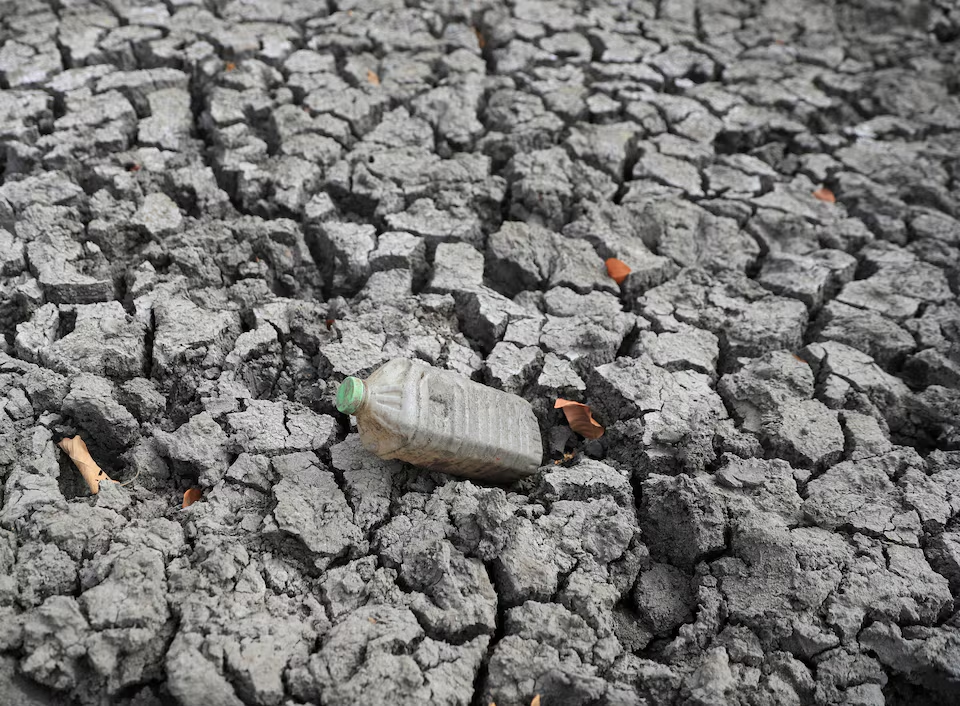
At the same time, the phenomenon can lead to drought conditions in countries such as Australia, Indonesia, parts of South Asia, and Central America, while also contributing to increased hurricane activity in the central and eastern Pacific.
The previous El Niño event between 2023 and 2024, which experts classified as strong, played a major role in making 2024 the hottest year ever recorded, according to Saulo.
She also cautioned that rising temperatures could worsen the spread of diseases carried by mosquitoes and ticks and further threaten food and water supplies, particularly in already vulnerable communities.
Concerns have also emerged over the economic impact of El Niño, especially on food prices. Cocoa producer Barry Callebaut warned that cocoa harvests in Ecuador and West Africa — regions responsible for around 60 percent of global cocoa production — could be negatively affected.
The company’s chief executive, Hein Schumacher, said the situation is being monitored closely due to the potential effect on cocoa prices.
Some national weather agencies have predicted that the upcoming El Niño could become the strongest in a decade. However, the WMO has adopted a more cautious approach while noting that unusually warm subsurface temperatures in the tropical Pacific are creating a significant reservoir of heat driving the warming trend.
António Guterres said the warning highlights the urgent need for countries to accelerate the transition from fossil fuels to renewable energy sources. He warned that El Niño conditions could further intensify the effects of global warming.
Source: Reuters
About The Author




