
Cocoa Debt Crisis: Too much politicization in the cocoa sector – Prof. William Peprah

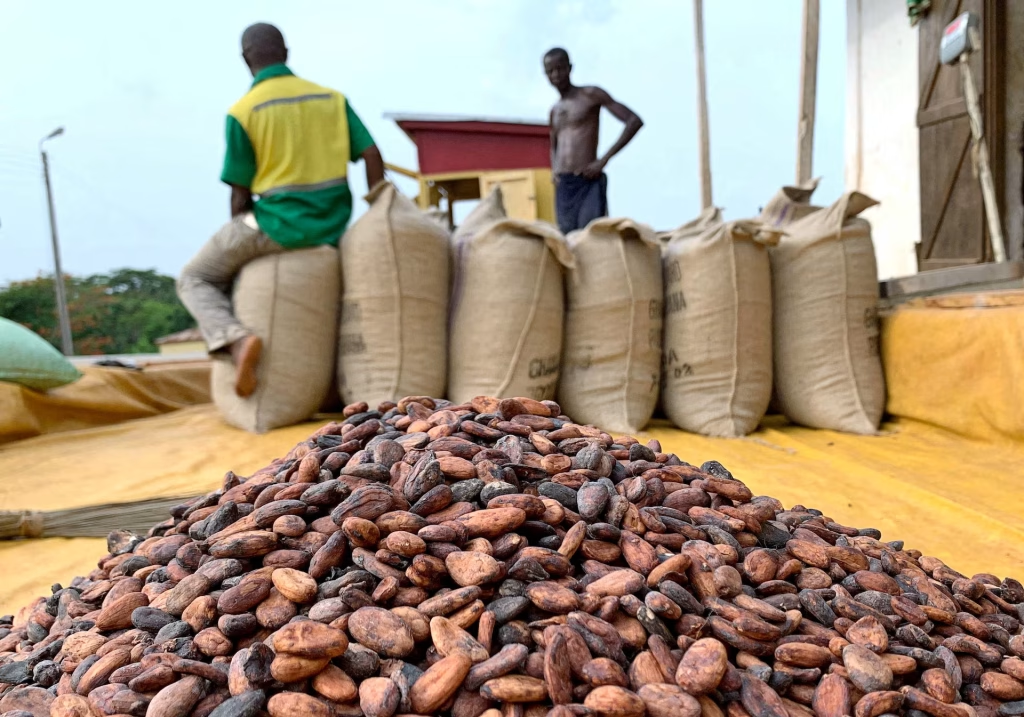
US-based Associate Professor of Finance at Andrews University, Prof. William Kwasi Peprah, has blamed excessive political interference as the main obstacle preventing Ghana’s cocoa sector from achieving its full economic potential.
According to him, apart from partisan blame games and global market conditions, systemic politicization remains the root cause of the sector’s current challenges.
“If you ask me, I belong to a different school of thought, not the two of them. My school of thought is that there is heavy politicization in the cocoa farming industry. Let me put it that way. And when it becomes that way, it makes it very difficult for us to see the actual benefits that must come from decision making,” he said on Joy News’ PM Express on Wednesday.
He noted that rather than attributing blame to any particular administration, the political nature of cocoa sector governance itself undermines good economic decision-making.
“The world market price, as we all know, especially with commodities like cocoa which has very ease of use and frequency of conversion, is highly priced entity,” he explained. “So, whatever decision one will take, we’ll have to always remember that the price can go up or down based on one’s need for the product and also any market fall in terms of weather and the rest.”
His comments follow public conversations on the current cocoa sector crisis after the government recently announced comprehensive reforms in the sector necessitated by COCOBOD’s mounting debt situation.
On February 12, during the announcement of the new producer price adjustment, Finance Minister Dr. Cassiel Ato Forson revealed that COCOBOD is saddled with a GH¢29 billion debt spanning the past 8 years.
He noted that COCOBOD had projected an output of 800,000 tonnes and committed 786,672 tonnes in forward contracts for the 2023/2024 crop season, but posted a 45% deviation that resulted in the rollover of 333,767 tonnes at an average price of $2,661 per tonne.
“This resulted in a loss of over 1 billion US dollars which would have gone to the cocoa farmer or other stakeholders,” Ato Forson stated. “In 2024, COCOBOD could not pay the final tranche of the syndicated loan which was due in July 2024 and received a 70 million US dollar break finance from the Ministry of Finance to avert a default.”
About The Author


