
Moldova approves new government led by Vasile Tofan

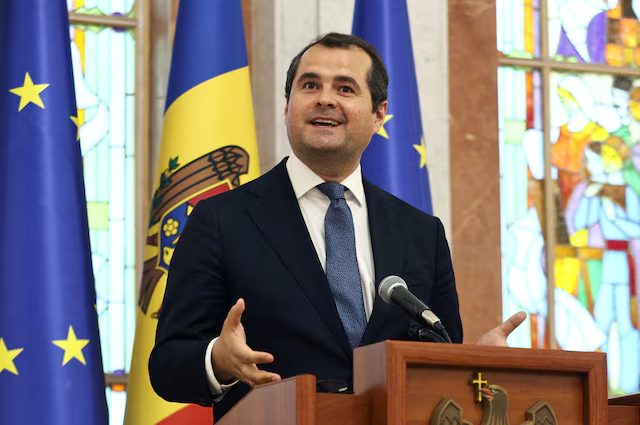
Moldova’s parliament has approved a new government headed by Prime Minister Vasile Tofan after he presented his administration’s agenda, promising to strengthen the economy while maintaining the country’s push towards European Union membership.
The Eastern European nation, one of the poorest in Europe and facing added pressure from the ongoing war in neighbouring Ukraine, recorded economic growth of 2.4% last year, with forecasts predicting a 2% expansion this year.
Presenting his government’s vision to lawmakers, Tofan, a 45-year-old financier, said the programme titled “The European Economy, an Effective State” would guide his administration’s efforts and serve as the basis for measuring its performance.
Tofan’s appointment was approved by 53 lawmakers from President Maia Sandu’s pro-European Party of Action and Solidarity (PAS), which holds a majority in the 101-seat parliament. Opposition parties did not participate in the vote.
The new prime minister said his government aims to complete an agreement on Moldova’s EU accession by the end of 2028 and prepare the country for membership by 2030. He added that his administration plans to open all remaining EU negotiation areas this year.
Moldova, which received EU candidate status alongside Ukraine, has so far opened two of six negotiation chapters required for membership.
Tofan takes office following the unexpected resignation of his predecessor, Alexandru Munteanu, who stepped down after only eight months in government.
The new administration has also pledged to reduce the country’s budget deficit, currently estimated at 20 billion lei ($1.1 billion), by two percentage points by 2029. Tofan announced plans for tax reforms, reducing bureaucracy and improving businesses’ access to funding.
Other priorities include privatising at least 10 state-owned enterprises, boosting investment in technology and artificial intelligence, increasing exports of higher-value goods and tackling the informal economy.
Moldova, located between Ukraine and EU member Romania, has long experienced political divisions between groups favouring closer European integration and those advocating stronger ties with Moscow.
Source: Reuters
About The Author


