
Deadly flash floods hit Nepal-Tibet border, leaving hundreds missing

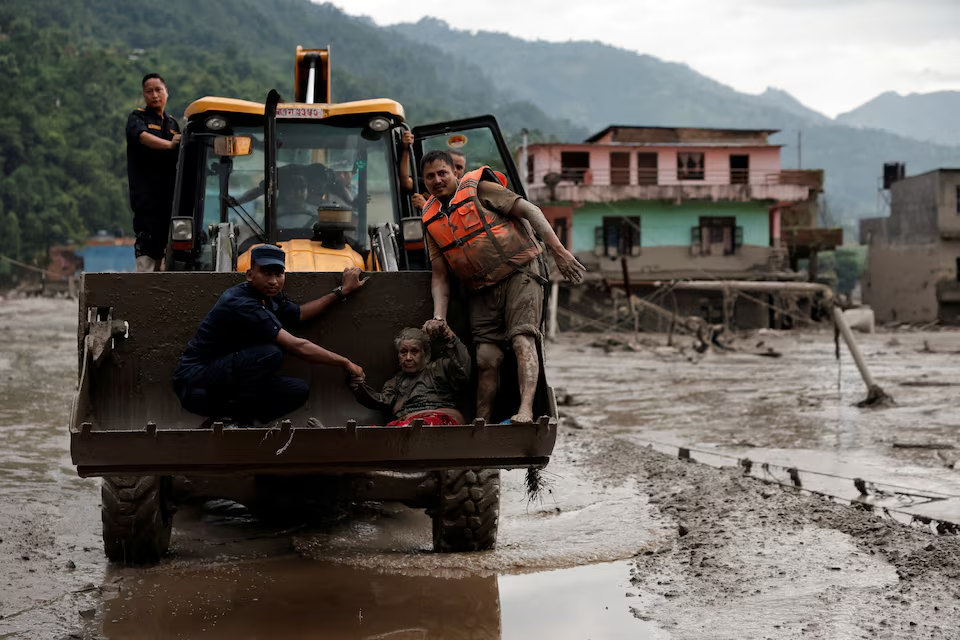
A massive landslide of mud and rock crashed into a river along the Nepal-China border on Wednesday, unleashing devastating floods on the Nepali side that killed scores of people and left hundreds of tourists unaccounted for.
The disaster was still unfolding, with verified video footage showing people being swept away by torrents at the border. Authorities in both Nepal and China warned that the death toll could rise significantly as rescue and recovery operations continued.
The floods destroyed homes, roads and hydropower infrastructure in Nepal. On the Tibetan side, officials also warned of potentially heavy casualties after a mudslide struck a border crossing in Gyirong County.
Survivors described the terrifying force of the floodwaters. One 68-year-old survivor, Keshav Prasad Baral, said a massive surge of mud entered his home and swept away his wife as he tried to lead her to safety. He was later rescued by helicopter, but his wife remained buried beneath the debris.
Another survivor said he escaped by holding onto a mango tree while watching the house where he had been working disappear in the flood.
Initial assessments by Nepali authorities suggested that an earthquake may have caused part of a glacier to collapse, potentially triggering the devastating floods.
By Wednesday evening, Nepal Police said 157 bodies had been recovered as rescue teams continued searching through the debris.
Nepal’s tourism authorities also reported that more than 400 tourists were missing, including approximately 340 foreigners. Of those missing, 133 were reportedly Indian pilgrims travelling to Kailash Manasarovar in Tibet.
Other missing tourists included 47 Americans, 34 Australians, 33 Britons and 24 Canadians.
The U.S. State Department said it was aware of Americans affected by the floods and was monitoring the situation. Canadian Prime Minister Mark Carney also described the disaster as “absolutely devastating.”
The affected region is located along a popular route to Kailash Manasarovar, a major pilgrimage destination visited by hundreds of Hindu devotees from India and other countries each year.
On the Chinese side, state broadcaster CCTV reported that three people had died and 265 others were missing in Gyirong, while noting that the figures were still being verified.
South Korea separately said eight of its citizens working at a hydropower project in the region were missing.
Security cameras on the Chinese side of the Nepal-Tibet border recorded people running for safety shortly before a powerful torrent of water, mud and rocks swept through the area, destroying buildings and vehicles.
The German Research Centre for Geosciences said a magnitude 4.4 earthquake occurred roughly seven minutes before the timestamp shown on the footage.
In Nepal’s Nuwakot and Dhading districts, residents gathered at an army training centre being used as a base for helicopter rescue missions. Families waited for information about relatives who remained missing.
Police officers recorded the names of missing people outside the military barracks, using mobile phone lights after electricity was cut off by damage to hydropower facilities.
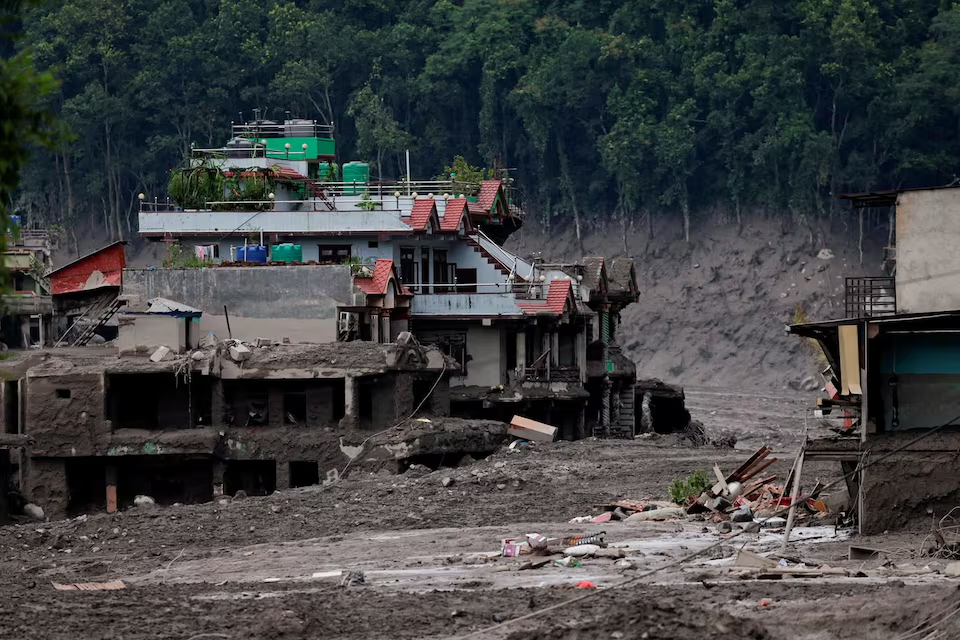
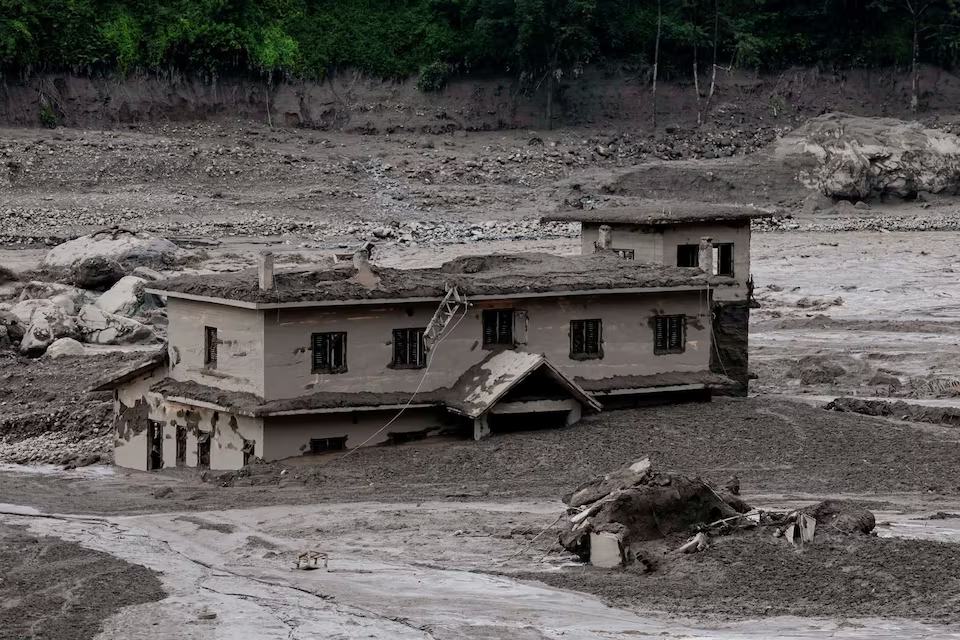
Across the affected communities, homes, vehicles and trees were buried or submerged in mud. Rescue helicopters spent much of the day transporting survivors to safer locations.
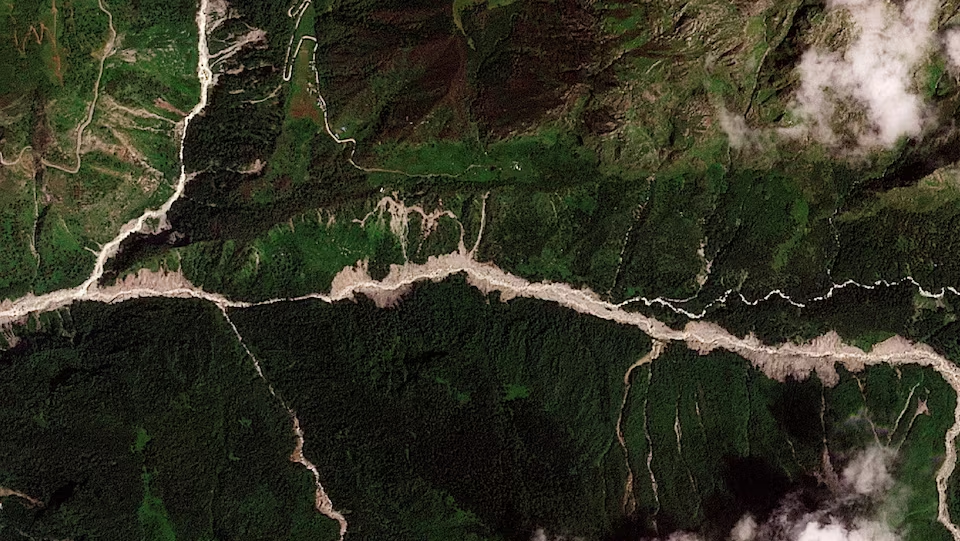
An initial review of satellite imagery by Planet Labs suggested that a landslide involving ice and rock triggered a debris-filled flood in the Lhende River, about 20 kilometres northeast of the Rasuwagadhi border crossing.
Rescue helicopters were unable to land in parts of Rasuwa district, including Syapru Besi and Timure, as floodwaters pushed the river beyond its normal course.
Television footage showed destroyed houses, vehicles floating in floodwaters and a metal bridge being swept away. Witnesses said entire settlements along the river had been overwhelmed.
“There is devastation everywhere we look,” said health worker Tula Bahadur BK, who reported that five of his relatives were missing.
China’s state-run Xinhua news agency reported that the mudslide struck the Gyirong border port, damaging roads and cutting communications and electricity in the Shigatse region.
A rescuer told CCTV that attempts to contact the Gyirong border crossing had so far failed. A preliminary drone assessment also found that all roads leading to the crossing had been destroyed.
As the huge volume of muddy water descended from the mountains, authorities issued flood warnings in India’s northern states of Uttar Pradesh and Bihar, both of which border Nepal and receive rivers flowing from the Himalayan region.
Authorities in Bihar said about 5,000 people had already been evacuated from six districts, with plans to move between 10,000 and 12,000 residents to safer areas.
Source: Reuters
About The Author


