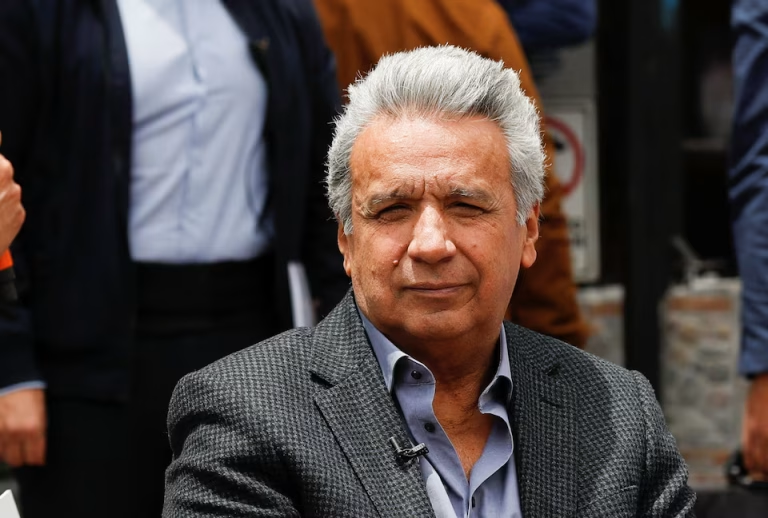
Nigeria Football Federation President resigns


Nigeria Football Federation (NFF) President Ibrahim Gusau has resigned from his position, ending his four-year tenure amid growing pressure over the state of football in the country.
Gusau announced his resignation during a world press conference at the NFF headquarters in Abuja on Thursday, August 27. His decision follows weeks of reports that he and several members of the federation’s Executive Committee had faced calls to step aside.
He explained that the decision came after sustained pressure from football stakeholders and consultations with his family, friends and other key stakeholders.
Gusau said the widespread calls for change prompted him and those close to him to carefully consider the situation before he decided to leave office.
“I decided to resign my position as President,” he said, adding that he had subsequently informed and advised members of his board about his decision.
However, Gusau declined to disclose the individual positions of Executive Committee members or provide details on the current state of affairs within the federation. He acknowledged that communication between him and some NFF structures had broken down.
His resignation follows a difficult period for Nigerian football, with the NFF facing increasing criticism over the performances of the country’s senior national teams.
The pressure escalated after the Super Falcons failed to qualify for the 2027 FIFA Women’s World Cup, ending Nigeria’s uninterrupted participation in the tournament since its launch in 1991.
Nigeria entered the 2026 Women’s Africa Cup of Nations (WAFCON) as defending champions but were eliminated in the quarter-finals after a 1-0 defeat to Cameroon. The loss ended their title defence and ruled out automatic World Cup qualification through the tournament.
The Super Falcons later suffered a 2-1 defeat to South Africa in the qualification play-off, effectively ending Nigeria’s hopes of making the 2027 World Cup.
The NFF subsequently apologised to President Bola Tinubu and Nigerians and formed a fact-finding committee to examine the reasons for the national team’s disappointing performance.
Gusau’s departure also comes after the Super Eagles failed to qualify for the 2026 FIFA World Cup, meaning Nigeria missed the global tournament for a second successive edition.
The string of setbacks has fuelled demands for accountability and major reforms in Nigerian football, putting sustained pressure on the NFF leadership before Gusau announced his resignation.
About The Author