Apple’s first foldable iPhone hits stores at $2,000 amid strong demand

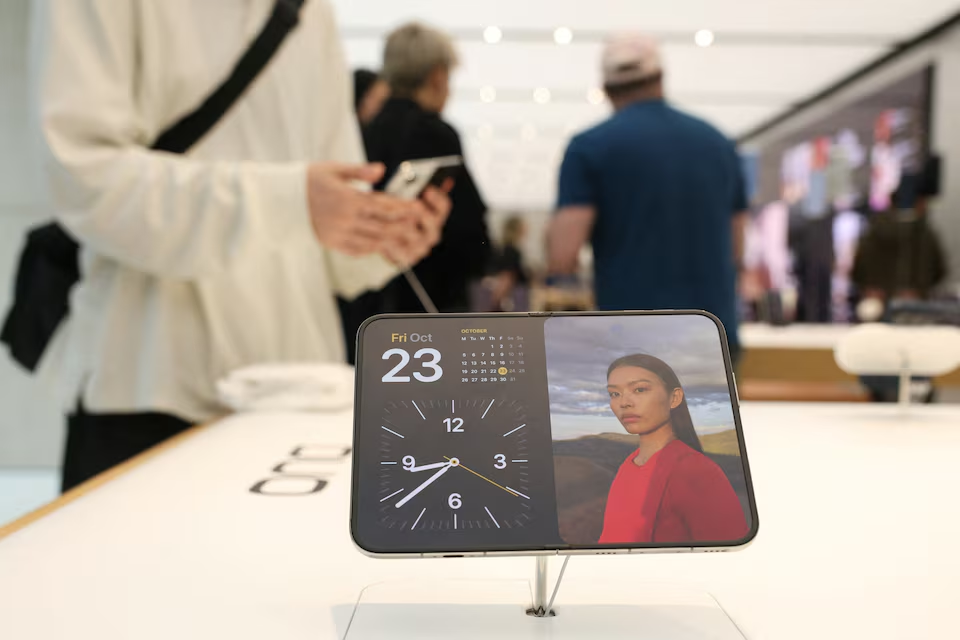
Apple’s first foldable smartphone, the iPhone Duo, went on sale globally on Friday at a price of about $2,000, attracting strong demand but generating less excitement than previous iPhone launches.
From Singapore and Shanghai to London and San Francisco, customers turned out to purchase the new device. However, limited stock meant there were fewer lengthy queues and overnight camping sessions, which traditionally characterised the launch of new iPhones.
The launch marks a major test for Apple as it seeks to establish itself in the foldable smartphone market, where competitors such as Samsung Electronics and Huawei Technologies have offered premium devices for several years. The company hopes the Duo can transform the relatively small foldable phone segment in the same way the original iPhone reshaped the smartphone industry.
The device also presents an early challenge for Apple’s new Chief Executive Officer, John Ternus, who unveiled the phone barely a week after taking over the role in September.
Demand for the Duo appeared strong even before its release, with estimated delivery dates extending to late January within minutes of pre-orders opening a week earlier. Apple described the response as “nothing short of extraordinary”.
The company limited pre-orders to two devices per customer and restricted some purchases to walk-in customers. In China, France, Hong Kong, India and Japan, the phones were available exclusively to customers who had placed online orders.
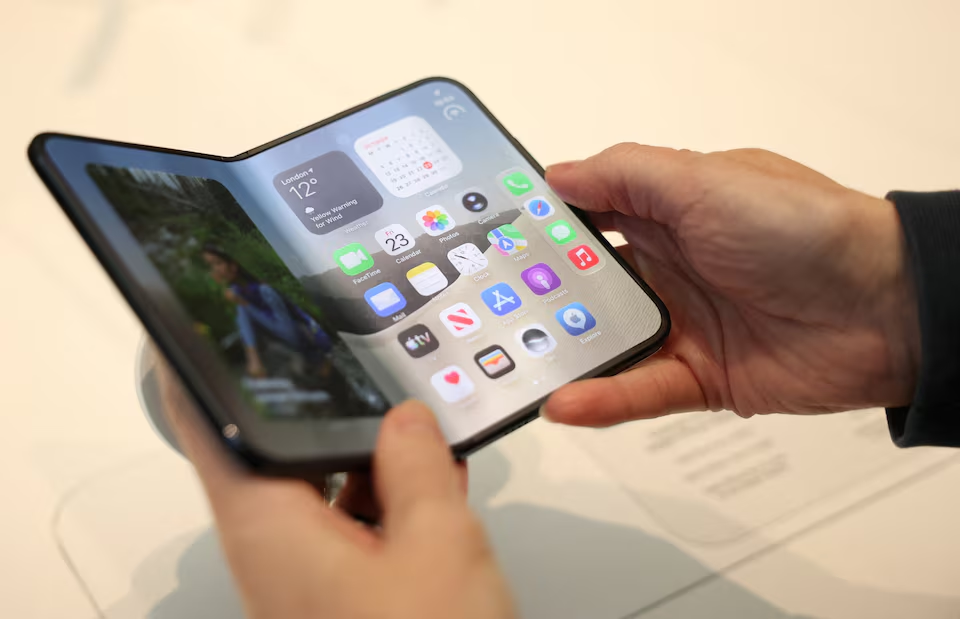
In Sydney, a queue formed outside Apple’s store before it opened at 8 a.m. local time on Friday, as customers gathered to purchase the new passport-shaped smartphone.
Simon Krishnan, a 48-year-old engineer, paid A$3,899, equivalent to about $2,734, for the 512GB model. He described the purchase as a luxury because of its high price but said he felt it was worth the expense.
Ternus welcomed customers at an Apple store in Austin, Texas, opening the doors and greeting shoppers with high-fives as they entered, according to a video shared by CBS Austin on X.
Meanwhile, Apple’s marketing chief, Greg Joswiak, opened the company’s Fifth Avenue flagship store in New York to waiting customers. Social media posts indicated that some shoppers had camped outside the store from as early as 4 a.m.
In San Francisco, consultant Mohit Chandel, 32, joined a queue outside an Apple store late on Thursday after realising he had forgotten to pre-order a Duo for his father in Singapore as a retirement gift. He purchased a bench and pillow from Walgreens to help him spend the night waiting for the phone.
Chandel said his father was unaware of the situation and was expecting the device to arrive by mail, leaving him determined to secure one after pre-orders sold out.
In China, where weak consumer demand and rising memory costs have contributed to six consecutive quarters of declining smartphone shipments, Apple’s market share has recovered as some consumers opt for more expensive devices.
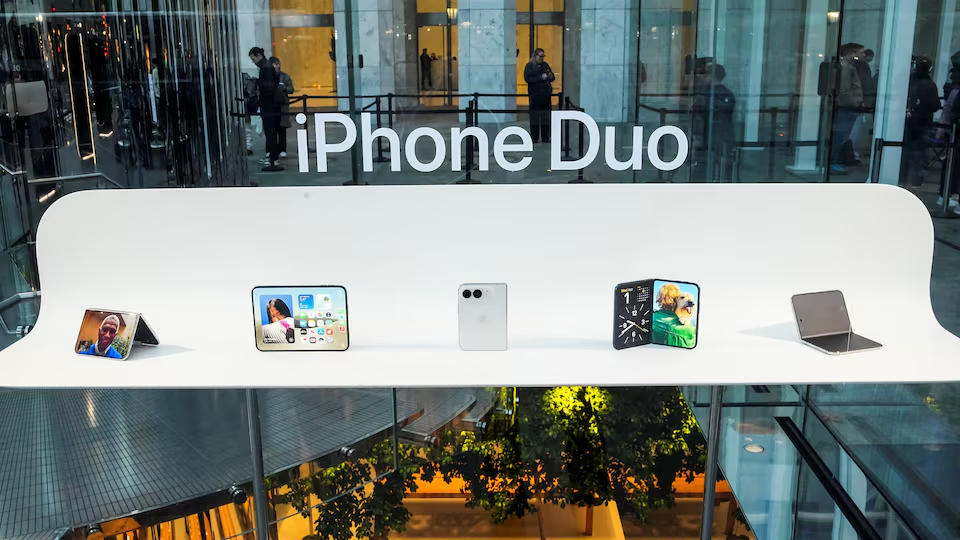
Liu Wei, a 26-year-old healthcare professional who already owns a foldable phone made by Xiaomi, queued outside an Apple store in Shanghai from 6 a.m. to try the company’s first foldable device.
He said his long-standing confidence in Apple products motivated him to purchase the phone on launch day.
While many customers arrived to collect pre-orders or hoped to secure limited stock, others were interested in viewing display models. Some buyers also intended to resell the devices for a profit.
In Hong Kong, one customer who identified herself only as May bought a 256GB Duo for HK$17,499, or approximately $2,232, through an online pre-sale. She planned to resell it for a profit of about HK$4,000.
In London, charity manager Paul Francis, 53, was among several dozen customers who spent the night in the rain outside Apple’s Regent Street store to obtain the new device.
Mixed reviews for the new device
Early reviews have praised the iPhone Duo’s design and its sturdy, barely noticeable hinge, addressing one of the longstanding concerns about foldable smartphones: the visible crease across their screens.
However, reviewers have raised concerns about compromises in the camera system, including the absence of a telephoto lens. Some third-party applications also require adjustments to accommodate the phone’s new display dimensions.
Critics have further argued that the device is less convenient when folded for everyday tasks, with several prominent reviewers suggesting that it may not be suitable for many existing Apple customers.
Longtime Apple commentator John Gruber said that although using the Duo had been enjoyable, the device felt more like a highly polished prototype than a finished product he would want to purchase and carry daily.
Technology reviewer Marques Brownlee similarly suggested that the phone might not appeal to ordinary users who primarily text and browse the internet. However, he said customers comfortable with its $2,000 price tag could find it enjoyable after adjusting to its features and the absence of facial recognition.
In Berlin, YouTube content creator Patrick Wolter praised the device for combining the functions of a smartphone and an iPad, saying it could eventually reduce the need to carry separate devices.
Apple eyes growth in the foldable market
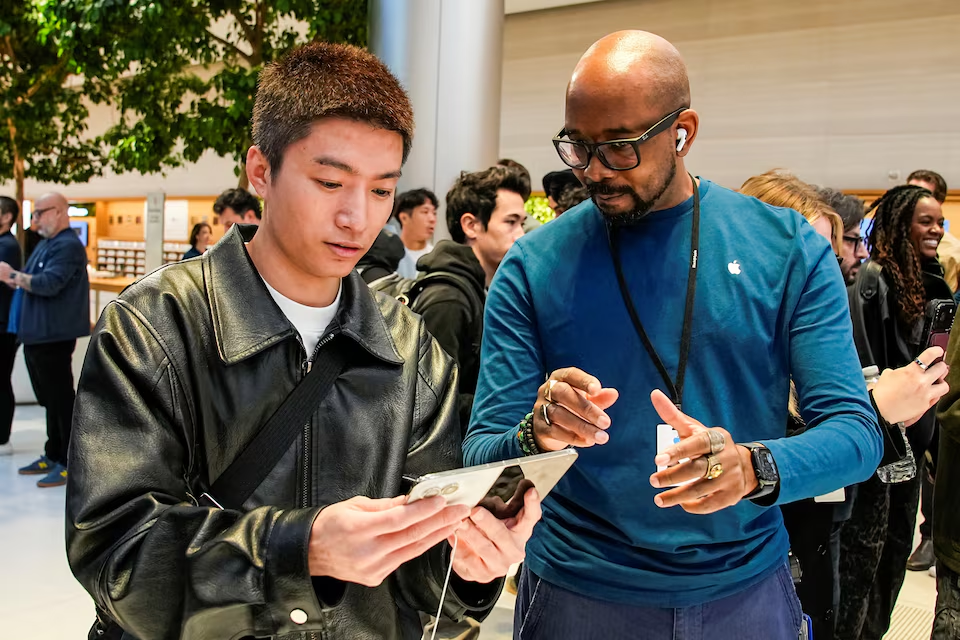
Apple’s entry into the relatively niche foldable smartphone segment could help introduce the technology to a much wider consumer base, according to Francisco Jeronimo, a vice-president at market research firm IDC.
IDC forecasts that Apple will capture 44% of the foldable smartphone market’s value in 2026 while accounting for 31% of total units sold. The firm expects Apple to become the market leader in both value and unit shipments by 2027.
Jeronimo said Apple had made a convincing case for the new form factor, but noted that its next challenge would be converting consumer excitement into product availability, wider adoption and sustained growth in the smartphone market.
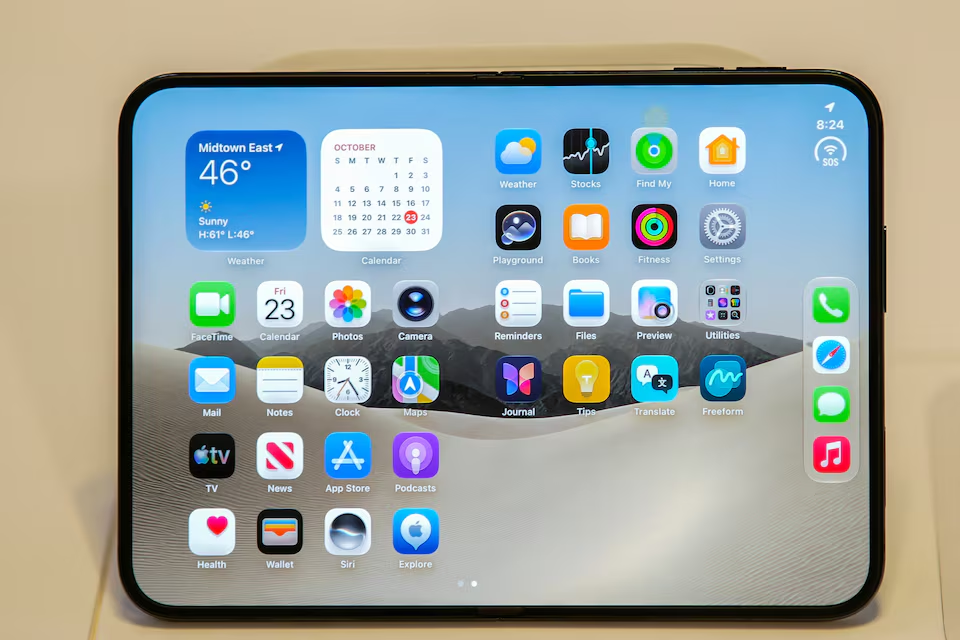
Source: Reuters
About The Author