
Tunisia opposition protests against president amid economic discontent


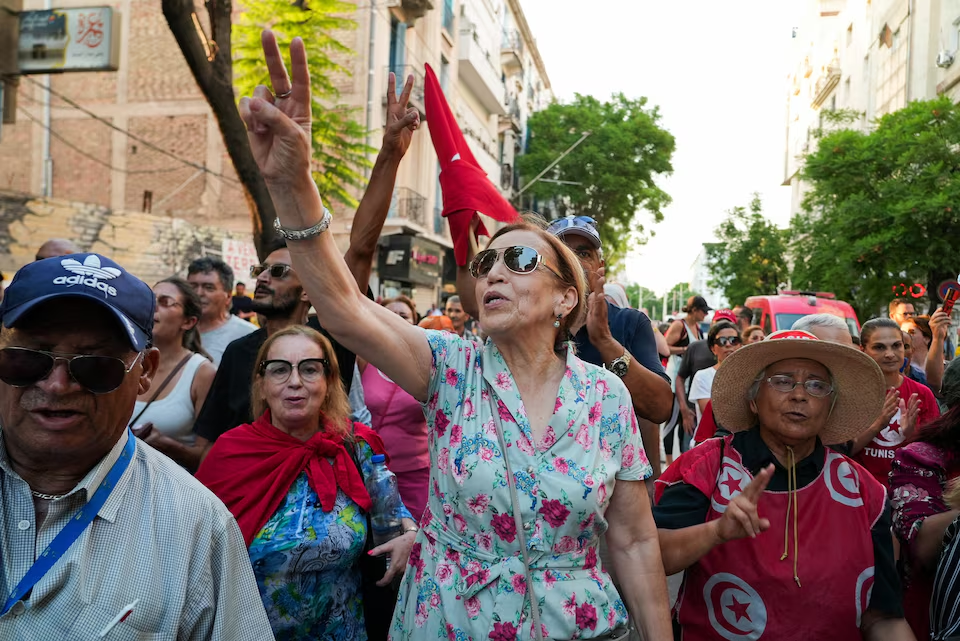
Activists and critics of Tunisian President Kais Saied staged a protest in Tunis on Thursday, demanding his resignation and the return of democratic rule. The demonstration came amid increasing political tensions and growing dissatisfaction with the country’s economic situation.
Hundreds of protesters denounced what they described as “one-man rule” and a drift towards dictatorship. They also called for the release of opposition politicians, activists and journalists who have been jailed.
The protest follows a similar demonstration last month marking the fifth anniversary of Saied’s July 25, 2021, decision to dismiss the government. He later dissolved the elected parliament and began ruling by decree.
Saied subsequently dissolved the Supreme Judicial Council and removed dozens of judges, arguing that the measures were necessary to tackle corruption in the judiciary. The decision was widely criticised, with international rights organisations warning that it threatened judicial independence.
While Thursday’s protest does not necessarily indicate an immediate political change, it highlights increasing pressure on Saied and demonstrates that his opponents can still mobilise despite divisions within the opposition.
Protesters carried banners demanding the restoration of civil liberties while expressing anger over worsening economic and social conditions.
“Enough of the failure, enough of the injustice and enough of the absurdity. The country is experiencing a complete collapse,” activist Wissem Sghaier told Reuters.
Tunisians are increasingly struggling with rising living costs, deteriorating public services and shortages of certain essential goods and medicines. In recent weeks, demonstrations have also erupted in different parts of the country over water and electricity cuts, as well as environmental concerns, indicating that public frustration is increasingly focused on everyday hardships as well as political issues.

Human rights organisations have accused Saied’s administration of conducting a widespread crackdown against opposition figures, independent civil society organisations, journalists and activists. They allege that the government has relied on the judiciary and security forces to silence its critics.
Saied has rejected claims that his government is politically persecuting opponents, maintaining that authorities are enforcing the law and targeting individuals suspected of financial corruption or plotting against the state.
About The Author


